“Brush your teeth!”
“Put your toys away!”
“Wash your hands!”
“Did you pack your school bag?”
If you are a parent, chances are you say at least one of these every day. Children may not always listen the first time, but there is a reason these little reminders matter. The everyday things children do repeatedly can slowly turn into habits, and those habits can stay with them as they grow.
The good news? Teaching good habits for kids does not have to mean giving them a long list of rules. Children learn best when good behaviour becomes part of their normal routine. A little consistency, a little patience and a lot of positive encouragement can go a long way.
Whether your child is getting ready for school, coming home from a busy day or preparing for bedtime, there are plenty of opportunities to introduce kids to healthy and positive habits.
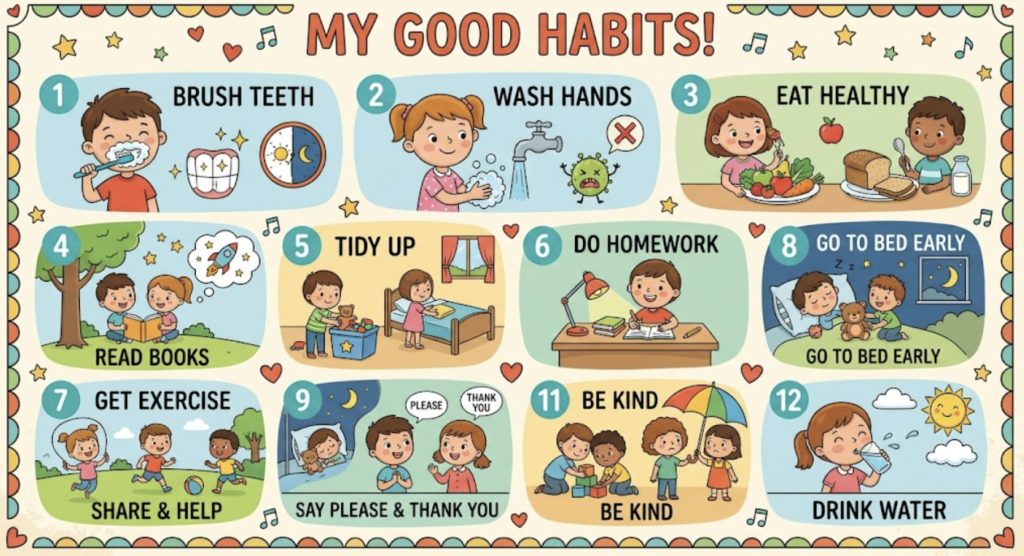
Here are 10 habits that can help children become healthier, more responsible, organised and considerate.
Table of Contents
Why Should Children Learn Good Habits Early?
Think about habits in your own life. You probably do many things without consciously thinking about them. You brush your teeth, wash your hands, get dressed and prepare for the day because these actions have become part of your routine.
Children can develop the same kind of automatic routines.
When a child learns to put their school bag in the same place every day, for example, finding it the next morning becomes much easier. When they regularly wash their hands before meals, they begin to understand that hygiene is simply part of eating.
Healthy routines can also support children’s physical and emotional well-being. The CDC recommends building healthy routines around nutrition, physical activity, sleep and screen use as children grow.
So, which habits should parents focus on first?
1. Start the Day With a Morning Routine
Mornings can be chaotic.
One child cannot find their socks. Another is still in bed. Someone forgot their homework. And somehow, everyone is hungry at exactly the same time!
A simple morning routine can make things much smoother.
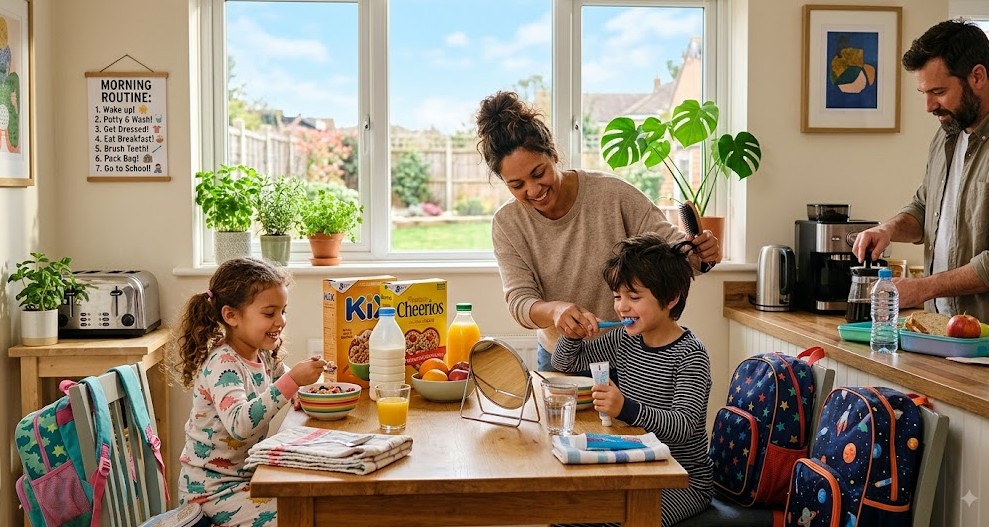
Teach your child to follow a basic sequence: wake up, make the bed, brush their teeth, wash their face, get dressed, eat breakfast and prepare their school bag.
You can make a visual routine chart for younger children using pictures. Instead of repeatedly telling them what to do, point to the chart and let them follow it.
As children grow, gradually give them more responsibility for completing their morning routine independently.
2. Keep Personal Hygiene a Priority
Children love getting messy. Muddy shoes, sticky hands and grass stains are often signs that they had a great day!
But having fun does not mean forgetting hygiene.
Teach children simple personal-care habits such as bathing regularly, brushing their teeth, washing their hands, changing into clean clothes and keeping their nails clean.
Explain the reason behind each habit instead of simply saying, “Because I said so.”
For example, tell them that washing hands helps remove dirt and germs. Explain that brushing teeth helps keep their teeth and gums healthy.
When children understand why something matters, they are more likely to take ownership of it.
3. Make Healthy Eating a Daily Habit
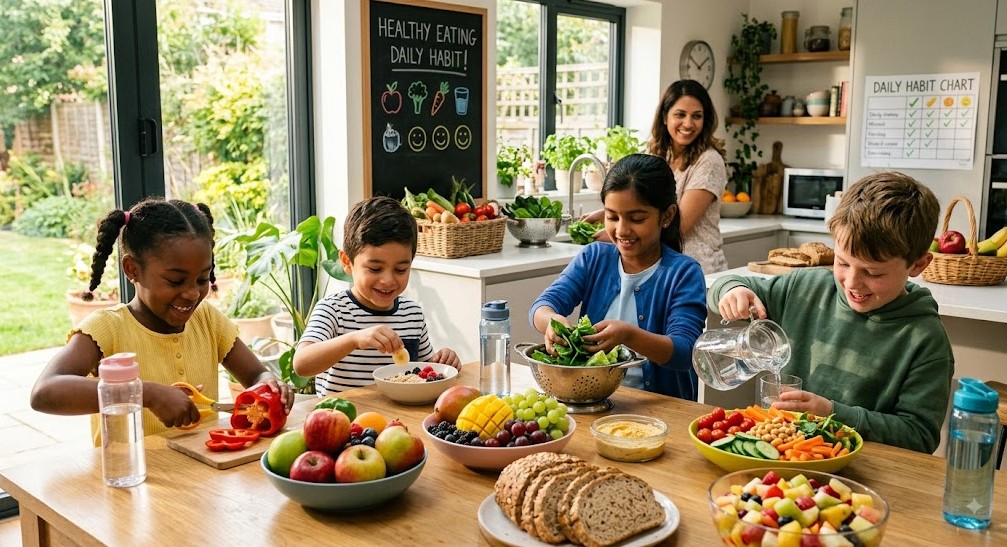
Food is more than something that fills a hungry tummy. Children need a variety of nutritious foods as they grow and stay active.
Try to make meals colourful and interesting. Add different fruits and vegetables, grains and protein sources according to your family’s usual diet.
And remember, children can be surprisingly unpredictable eaters. They may love bananas today and refuse to look at them tomorrow!
Instead of forcing children to finish every food they dislike, continue offering a variety of healthy options. Let them participate in choosing or preparing simple foods.
For example, a child can wash vegetables, arrange fruit on a plate or help prepare a sandwich.
These little activities can make children more interested in what they eat.
4. Drink Water Regularly
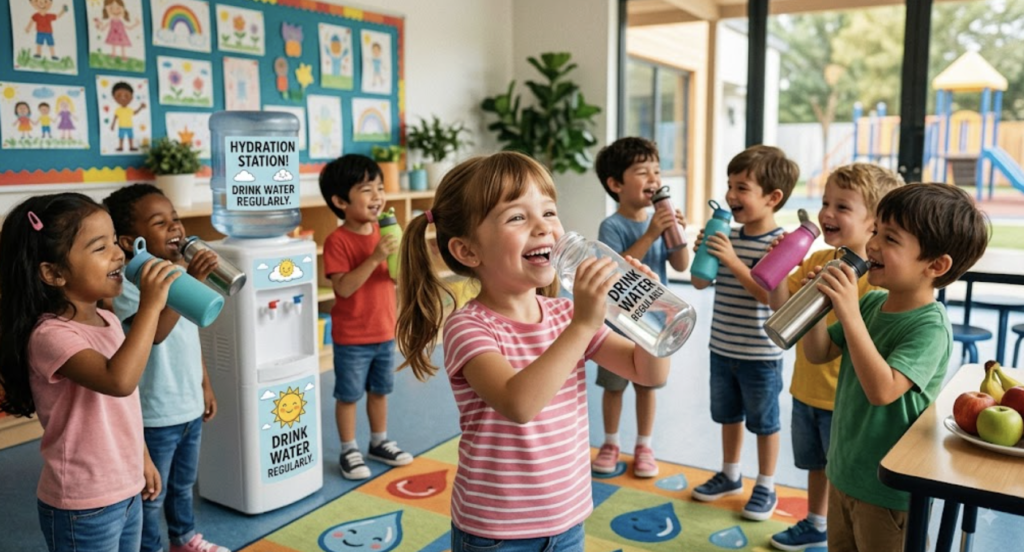
Sometimes children get so busy playing that they forget to drink water.
Make drinking water an easy habit by keeping a water bottle where your child can reach it. Encourage them to drink throughout the day, especially when they are active or playing outdoors.
You can even allow children to choose their own reusable bottle. A bottle featuring their favourite colour or design can make drinking water feel a little more exciting.
Rather than making sugary drinks the default choice, make plain water an everyday option.
5. Put Things Back Where They Belong
Here comes one of the biggest parenting challenges: getting children to clean up after themselves!
The secret is to start small.
Your child does not need to clean the entire house. Give them simple responsibilities that match their age. They can put toys into a box, return books to a shelf, place dirty clothes in the laundry basket or put shoes in the correct place.
You can make clean-up time fun by turning it into a game.
“Can you put all the red blocks away before I count to 20?”
Suddenly, cleaning does not sound quite so boring.
Over time, children learn that using something also means taking responsibility for putting it away.
6. Learn to Say “Please,” “Thank You” and “Sorry”
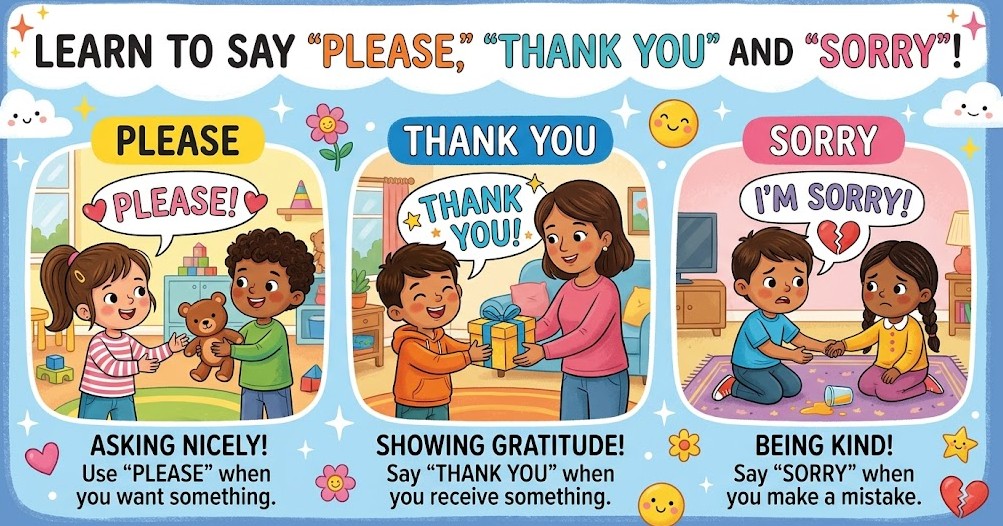
Good manners can open many doors.
Children should learn how to speak politely, show gratitude and apologise when they make a mistake. But remember that manners are more meaningful when children understand them rather than simply repeating words.
Teach your child to say “please” when making a request and “thank you” when someone helps them. Explain that “sorry” is important when their actions hurt or upset someone.
Parents can reinforce these lessons through everyday conversations.
For instance, instead of simply correcting a child, model the behaviour yourself. Say “please” when asking them for something and “thank you” when they help you.
Children watch adults more closely than we sometimes realise!
7. Read Something Every Day
Reading can take children to places they have never visited and introduce them to people they have never met.
A child can travel through a jungle, explore space, meet historical figures or solve a mystery—all without leaving the sofa.
That is the magic of books.
Try to create a small daily reading routine. It could be before bedtime, after school or during a quiet afternoon.
Young children can start with picture books and stories. Older children can explore novels, comics, magazines, biographies or educational books.
Do not worry if your child does not immediately choose the book you would have picked. If they love dinosaurs, give them dinosaur books. If they enjoy football, look for books about football.
The goal is to make reading something they enjoy.
8. Make Time for Outdoor Play
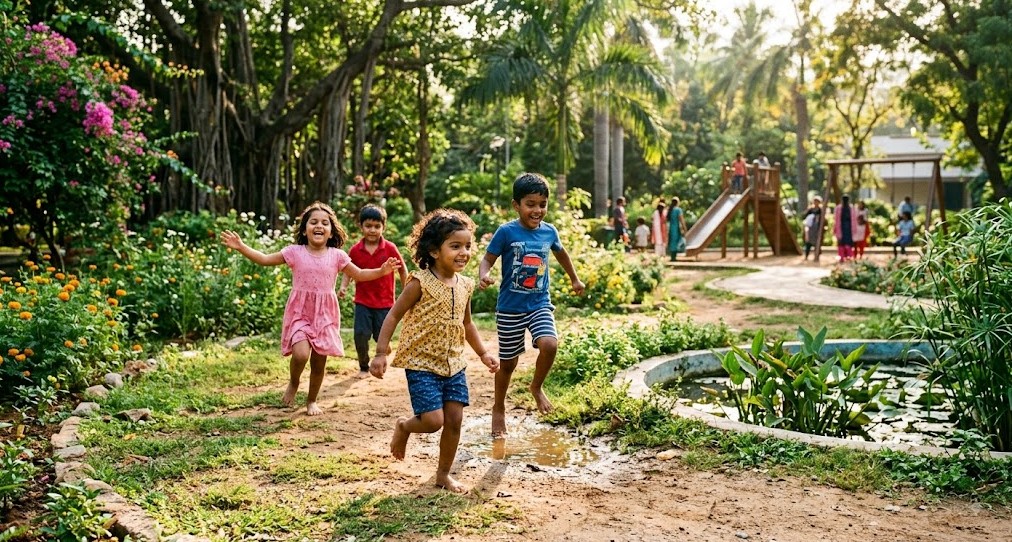
Children need time to move their bodies and play freely.
Outdoor play can be as simple as running around the park, riding a bicycle, playing cricket, kicking a football, skipping, dancing or exploring nature.
Physical activity does not always need to be a formal sport. Let children have opportunities to move, experiment and play.
Parents can make this easier by joining them. A family walk or weekend game can become a routine that everyone looks forward to.
Regular physical activity is also one of the healthy behaviours recommended for children and teenagers.
9. Learn to Share, Listen and Help
Good habits are not only about keeping the body healthy. They are also about becoming a good human being.
Teach children to listen when someone is speaking, share when appropriate and offer help when someone needs it.
Suppose a sibling is struggling to pick up their toys. Instead of laughing or walking away, encourage your child to help.
If a friend is talking, teach them to wait for their turn instead of interrupting.
These small actions help children develop empathy and social skills.
Of course, children will not always behave perfectly. That is okay. Use everyday situations as opportunities to talk about how their actions affect others.
10. Create a Healthy Bedtime Routine
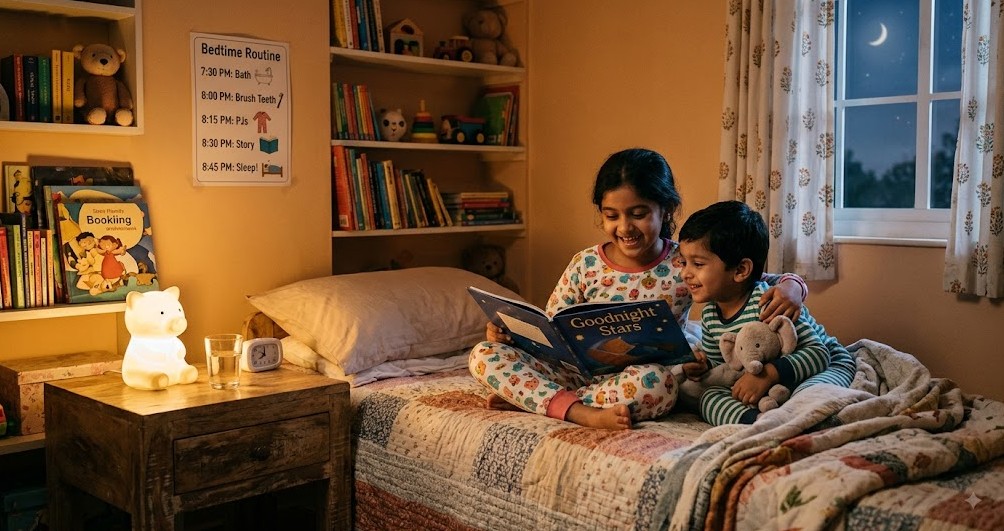
Bedtime should not begin with, “Five more minutes!”
And then another five minutes.
And another.
A predictable bedtime routine can make evenings calmer for both children and parents.
Start winding down before bedtime. Children can put away their toys, prepare their school bag, change into night clothes, brush their teeth and read a story.
Try to keep the bedroom environment calm and avoid stimulating activities close to bedtime.
Getting enough sleep is an important part of children’s health. The CDC notes that children and teenagers need adequate sleep for healthy development and well-being.
A consistent routine can also help children understand that the day is coming to an end.
How to Make Good Habits Stick?
Knowing what habits children should learn is one thing. Getting them to actually follow those habits is another!
The first rule is simple: do not try to change everything at once.
If your child currently has no regular routine, suddenly introducing 10 new rules can feel overwhelming. Pick one or two habits and practise them first.
For example, start with brushing teeth every morning and evening. Once that becomes normal, add putting toys away before bedtime.
Gradually, more habits can become part of the routine.
Keep Instructions Simple
Children can lose interest when instructions become long lectures.
Instead of saying:
“Every single day I have to tell you to put your toys away, and you know how many times I’ve told you…”
Try:
“Playtime is over. Let’s put the toys away.”
Short and clear instructions are easier to understand.
Give Children Choices
Giving children small choices can help them feel responsible.
Ask:
“Do you want to brush your teeth before or after putting your pyjamas on?”
“Would you like to read this book or that one?”
“Do you want to clean up the blocks or the cars first?”
The habit remains the same, but the child gets some control over how they complete it.
Celebrate Small Wins
Children love encouragement.
You do not need to offer a prize every time they do something correctly. Sometimes a simple “Well done!” or “I noticed you remembered that yourself” is enough.
Positive feedback can encourage children to repeat good behaviour.
Be Patient
Some days will go perfectly.
Other days will feel like complete chaos.
That is normal.
Children are still learning. They will forget, resist, get distracted and make mistakes. Instead of expecting perfect behaviour every day, focus on progress.
Parents Should Practise What They Teach
Here is the part children are very good at noticing: hypocrisy!
If you tell your child to put the phone away during dinner while checking your own messages at the table, they will notice.
If you tell them to speak politely but shout during an argument, they will notice that too.
Children learn by observing adults. Healthy routines at home can therefore be more powerful than repeated instructions.
You can make habits a family activity.
Everyone puts their phones away during dinner.
Everyone helps tidy the living room.
Everyone says thank you.
Everyone prepares for bedtime.
When children see that good habits are not just “rules for kids”, they are more likely to accept them as a normal part of family life.
What If a Child Refuses to Follow a Habit?
Do not panic.
Resistance is common, especially when introducing something new.
First, find out why the child is refusing. Perhaps the task feels difficult, boring or unfamiliar. Maybe they are tired or simply want more independence.
Try making the habit easier.
If cleaning an entire room feels overwhelming, ask the child to start with five toys. If reading for 30 minutes feels too long, start with 10 minutes.
You can also use routines instead of repeated reminders.
For example, rather than asking, “Did you brush your teeth?” every night, make brushing teeth a fixed part of the bedtime sequence.
Over time, the child can begin doing it without being reminded.
A Simple Good-Habit Checklist for Kids
Parents can create a simple checklist that children can follow each day:
| Habit | Done? |
| Wake up on time | ☐ |
| Brush teeth | ☐ |
| Eat a healthy breakfast | ☐ |
| Drink water | ☐ |
| Keep belongings organised | ☐ |
| Be polite and respectful | ☐ |
| Read for a few minutes | ☐ |
| Play or stay physically active | ☐ |
| Help someone | ☐ |
| Follow a bedtime routine | ☐ |
The checklist does not have to be perfect. Its purpose is simply to help children become aware of their routines.
Final Thoughts
Teaching good habits for kids is not about raising a child who never makes a mess, never forgets anything and always follows every rule.
It is about helping children gradually become independent and responsible.
A child who learns to brush their teeth learns to care for their health. A child who puts away their toys learns responsibility. A child who says thank you learns gratitude. A child who helps a friend learns kindness. A child who reads regularly develops curiosity.
These may look like tiny actions, but together they can shape a child’s character and everyday life.
Start with one habit. Keep it simple. Make it fun. Show your child how it is done and give them plenty of encouragement along the way.
Most importantly, let children be children. They will make mistakes, forget routines and occasionally leave toys everywhere. That is part of growing up. With patience and consistency, those little daily actions can slowly become habits that stay with them for years to come.
For more information, visit our blog.